
Growing Quiet Confidence for the 11+: helping your child trust what they know
21 August 2026 · The ElevenReady Team
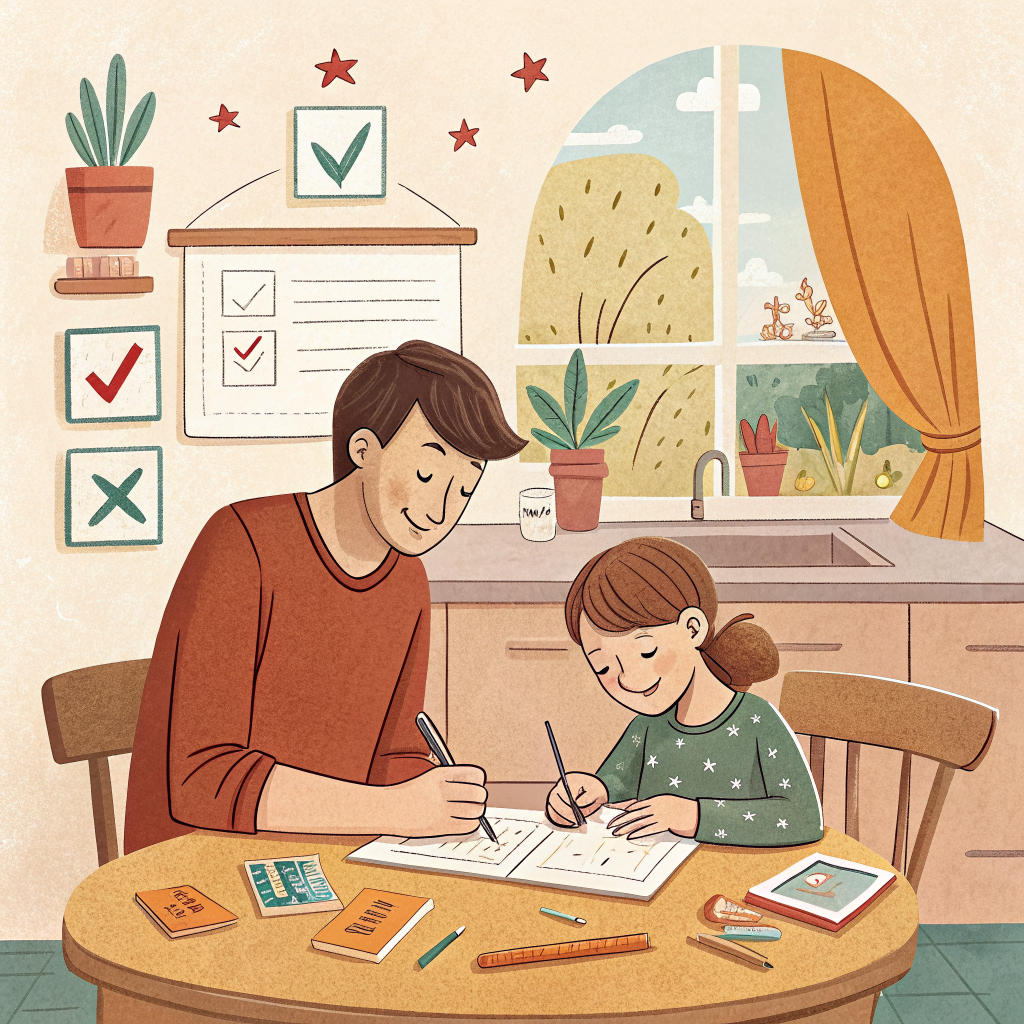
Many children preparing for the 11+ don’t look obviously worried. They sit down, do the paper, shrug when you ask how it went, then quietly say things like, “I’m just not good at this” or “I always mess up the easy ones.” Confidence problems often sound small at first. Left alone, though, they can grow into nerves, second-guessing and a habit of giving up too quickly. The good news is that confidence can be built in a very practical way.
Start by spotting what confidence really looks like
For 11+ preparation, genuine confidence is not about your child feeling brilliant all the time. It is much steadier than that. A confident child can have a bad practice paper and still come back to the next one. They can meet an unfamiliar question and think, “Let me work this out” rather than “I can’t do this.”
That means the goal is not to convince your child that every paper will go perfectly. It is to help them trust their process.
- Prepared confidence: “I’ve practised this type before.”
- Flexible confidence: “This looks different, but I can try a method.”
- Recovering confidence: “I got stuck, and then I got going again.”
If your child is very self-critical, praise that points only to outcomes can backfire. “You’re so clever” sounds nice, but after a tricky paper it can leave them thinking they have somehow stopped being clever. Try noticing behaviours instead: concentration, checking, persistence, sensible guesses, moving on from a time-draining question.
Change the conversation at home
Children often build their own story about the 11+ from the questions we ask. If every chat starts with scores, marks and rank order, it is easy for them to believe that numbers are the only thing that matters.
You do not need to avoid scores altogether, but it helps to widen the conversation. After a practice session, try questions like:
- Which question felt better than last time?
- Where did you stay calm when it got tricky?
- Did you spot a careless mistake pattern?
- What is one thing to remember next time?
This does two useful things. First, it teaches your child to reflect rather than just react. Second, it shows them that progress is made of small, repeatable improvements.
Be careful with reassurance that is too broad. Saying “Don’t worry, you’ll be fine” can accidentally make a worried child feel misunderstood. Something more grounded tends to land better: “That section felt hard today, but you still used your timings well and kept going. Let’s look at the two question types that slowed you down.”
Use evidence to challenge the “I can’t do this” story
When nerves build, children often remember the wrong evidence. One difficult comprehension becomes proof they are “bad at English”. One poor maths score means they “never get maths right”. Your role is to help them see the fuller picture.
A simple way to do this is to keep a small record of wins. Not a huge display board. Just a notebook page or folder where you jot down concrete signs of progress:
- finished a section in time
- improved accuracy on codes or sequences
- remembered to underline key information
- corrected answer-sheet slipping
- stayed focused after getting stuck
On a wobble day, look at that record together. Confidence grows when children can see proof that effort has led somewhere.
It also helps to be specific about weak spots. “You’re struggling with everything” is overwhelming. “You’re mostly secure on arithmetic, but worded problems with two steps are tripping you up” is actionable. Children feel safer when the problem is named properly.
Practise recovery, not perfection
One of the biggest differences between a child who copes well under pressure and one who unravels is not knowledge. It is recovery. Can they reset after a blank moment, a difficult page or a silly mistake?
You can practise this during normal revision. In fact, that is the best place to do it.
- Build in tiny pauses. If your child gets flustered, teach them to stop for one breath, relax their shoulders and restart with the next question.
- Normalise skipping and returning. Children often think confident candidates answer everything in order. Many do not. Moving on wisely is a skill.
- Review mistakes calmly. The aim is not to relive the error but to label it: timing, misread instruction, vocabulary gap, careless arithmetic, guessed too soon.
- Repeat troublesome question types in small batches. Confidence comes faster from mastering five similar questions than from drowning in a full paper every time.
This matters because children who expect themselves never to wobble feel alarmed the moment they do. Children who have practised recovering know that one sticky question does not ruin the whole paper.
Know when to step in and when to ease off
Parents often feel they should fix every dip in confidence straight away. Sometimes that helps. Sometimes it adds pressure.
Step in if your child is avoiding work they used to attempt, becoming upset before every session, or speaking about themselves in a consistently harsh way. In those moments, reduce the emotional temperature. Shorter sessions, more supported practice and a focus on familiar ground can help them regain their footing.
Ease off if every piece of work turns into a post-mortem. Some children need space to finish a paper, put it away, have a snack and come back later. Immediate analysis is not always the best analysis.
And remember: confidence is often quiet. It may look like less arguing before revision. It may sound like “I’ll try that one again”. It may be your child checking their work without being told, or tackling a question they would once have skipped.
The 11+ can make children feel as if they are being measured all the time. At home, try to make room for something different: the sense that they are learning how to handle challenge. That is a far more durable kind of confidence, and it will serve them well long after the papers are over.
If you want preparation to feel more manageable, ElevenReady helps families turn practice into clear next steps, so children can build confidence from real progress rather than guesswork.