
Helping Your Child Read Like an 11+ Candidate: Small Habits That Build Stronger Comprehension
31 August 2026 · The ElevenReady Team
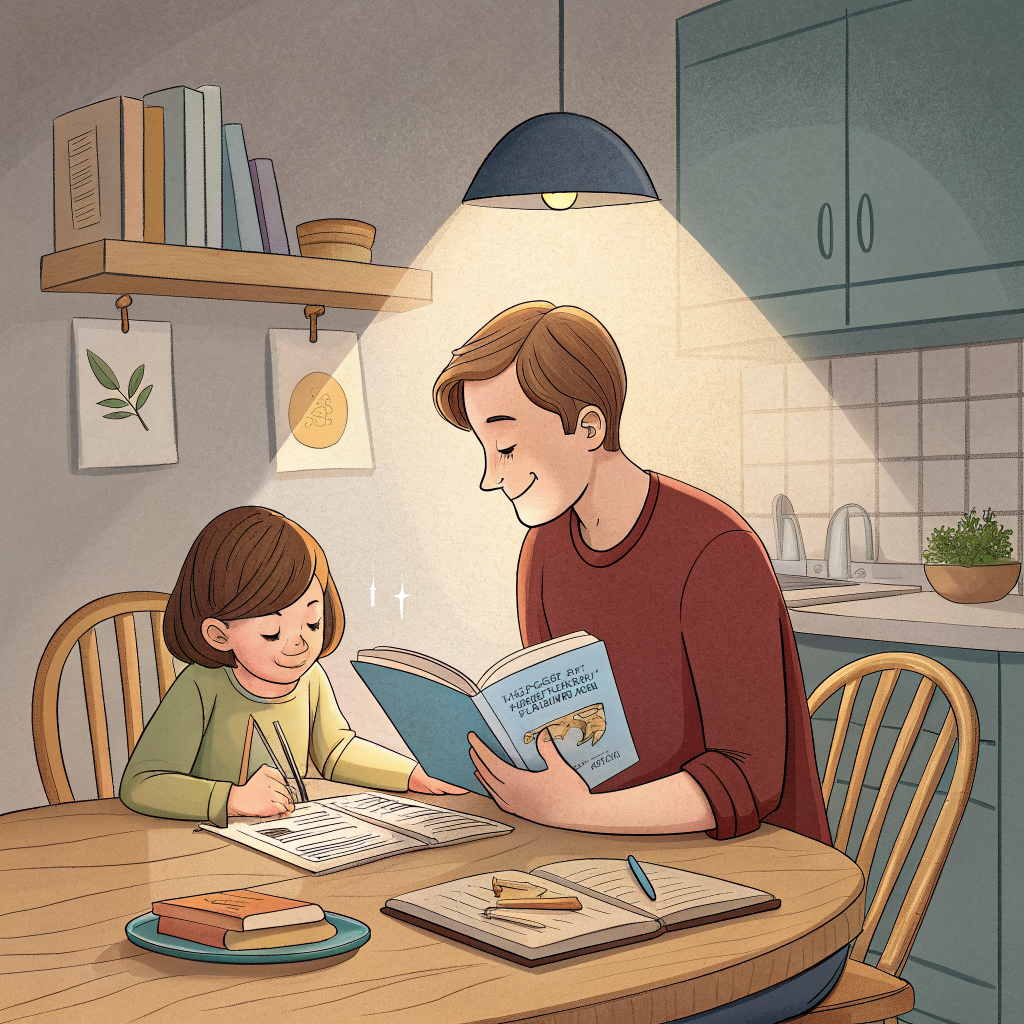
Many children can read the words on the page perfectly well, yet still lose marks in comprehension. That is usually not a sign that they are ‘bad at reading’. More often, they are rushing, guessing, or not quite noticing what the question is really asking. The good news is that these are all skills that can be built at home, in small and manageable ways.
Shift the focus from ‘more reading’ to ‘better noticing’
Parents are often told to get their child to read more. That can help, of course, but for 11+ preparation it is not only about quantity. It is about learning to notice how a passage works.
When your child reads, pause now and then and ask a few precise questions:
- What do you know for certain?
- What do you think is implied, but not directly stated?
- Which word gives you that idea?
- How is the character feeling, and what is the evidence?
That last part matters. In many comprehension questions, the mark is not for a plausible guess. It is for an answer rooted in the text.
You do not need to turn every reading session into a lesson. Even five minutes of this kind of conversation helps children move from simply following a story to reading with real attention.
Use short texts in different styles
Children preparing for the GL-style 11+ often meet a mix of fiction and non-fiction, sometimes with language that feels less familiar than their usual reading book. If they only ever read one type of text, comprehension can become shaky when the style changes.
It helps to mix things up across the week. Try:
- an opening page from a children’s novel
- a short newspaper-style report written for young readers
- a biography extract
- a nature or science article
- a classic text with slightly older vocabulary
The aim is not to make reading harder for the sake of it. It is to make unfamiliar styles feel normal. A child who has practised moving between narrative, factual writing and description is usually calmer in the exam, because the page in front of them feels less daunting.
If your child meets a tricky paragraph, resist the urge to explain it straight away. First ask, What is this section mostly about? Then narrow it down sentence by sentence. Children often understand more than they think once they slow down.
Practise answering the question that was asked
One of the biggest comprehension issues is not reading the passage badly, but reading the question carelessly. Children may spot a familiar word and answer too quickly. That is why question-handling is worth practising separately.
Show your child how to underline the key part of the question before answering. For example:
- Find one word that shows...
- Why do you think...
- How does the writer make the scene seem...
- What does this suggest about...
Those question stems require different kinds of answers. A ‘find one word’ question needs precision. A ‘why do you think’ question needs inference. A ‘how does the writer’ question needs your child to comment on language, not just retell the event.
A useful home habit is this: after your child answers, ask Did you prove it from the text? If not, they may have given a reasonable opinion, but not a strong exam answer.
You can also encourage them to go back and highlight the line that supports their answer. This simple step trains them to link answer and evidence, which is exactly what stronger candidates do.
Build vocabulary naturally, not as a list to memorise
Vocabulary matters in 11+ comprehension, but children rarely absorb new words well from long word lists alone. They learn them best when they meet them in context, talk about them, and use them again later.
Try keeping a small notebook of words your child comes across while reading. Not dozens at a time. Just a few each week. For each word, jot down:
- the sentence it came from
- what your child thinks it means
- a simpler synonym
- a new sentence of their own
This works especially well with words that describe mood, movement and character, such as reluctant, brisk, grim or hesitant. These often appear in comprehension passages and help children make better inferences.
It is also worth noticing words with more than one meaning. In exams, children can be thrown by familiar words used in an unfamiliar way. A quick chat about context can make a real difference.
Make review part of the routine
Children often complete a comprehension, mark it, and move on. That misses the most useful part. The real improvement tends to happen in the review.
When your child gets a question wrong, avoid saying only, ‘Read it more carefully.’ Instead, work out what went wrong:
- Did they misunderstand a word in the passage?
- Did they miss a clue?
- Did they answer from memory instead of checking back?
- Did they misread the question?
- Did they give the right idea but not enough detail?
This helps you spot patterns. Some children need most help with inference. Others need to slow down and retrieve evidence more carefully. Once you know the pattern, practice becomes much more effective.
Keep sessions short enough that your child can stay fresh. Two well-reviewed passages in a week can be more valuable than a pile of rushed worksheets.
If you want extra support, structured 11+ practice through a platform such as ElevenReady can help children get used to the style and pacing of GL-style questions while giving parents a clearer sense of where the gaps are.
A good goal for comprehension is not just ‘get more right’. It is: read carefully, think clearly, and show your evidence.
That is what gives children a stronger footing, both for the exam and for reading more generally. Start small, keep it steady, and remember that careful reading is a skill built over time. Children do not need to become perfect readers overnight. They just need regular chances to notice a little more than they did last week.